I’m just going to start by telling the truth.
For years, we have heard warnings that American agriculture is collapsing.
But I don’t think “collapsing” tells the whole story anymore.
In many ways, it has already collapsed.
The United States had approximately 6.8 million farms in 1935. By 2024, that number had fallen to just 1.88 million—the lowest number in more than a century.
Between 2017 and 2024 alone, America lost approximately 160,000 farms.
That is not a warning about something that may happen someday.
It is happening right now.
Farmers Aren’t Failing. The System Is.
American farmers did not suddenly forget how to work hard and sell well.
They did not become careless, lazy or bad at business.
We built a food system in which many of the people growing our food cannot afford to support their families by farming alone.
According to the USDA, off-farm income is essential for most farm households. In 2024, the median household income earned from farming was negative $1,830.
Read that again.
The typical farm household did not earn money from farming. It lost money.
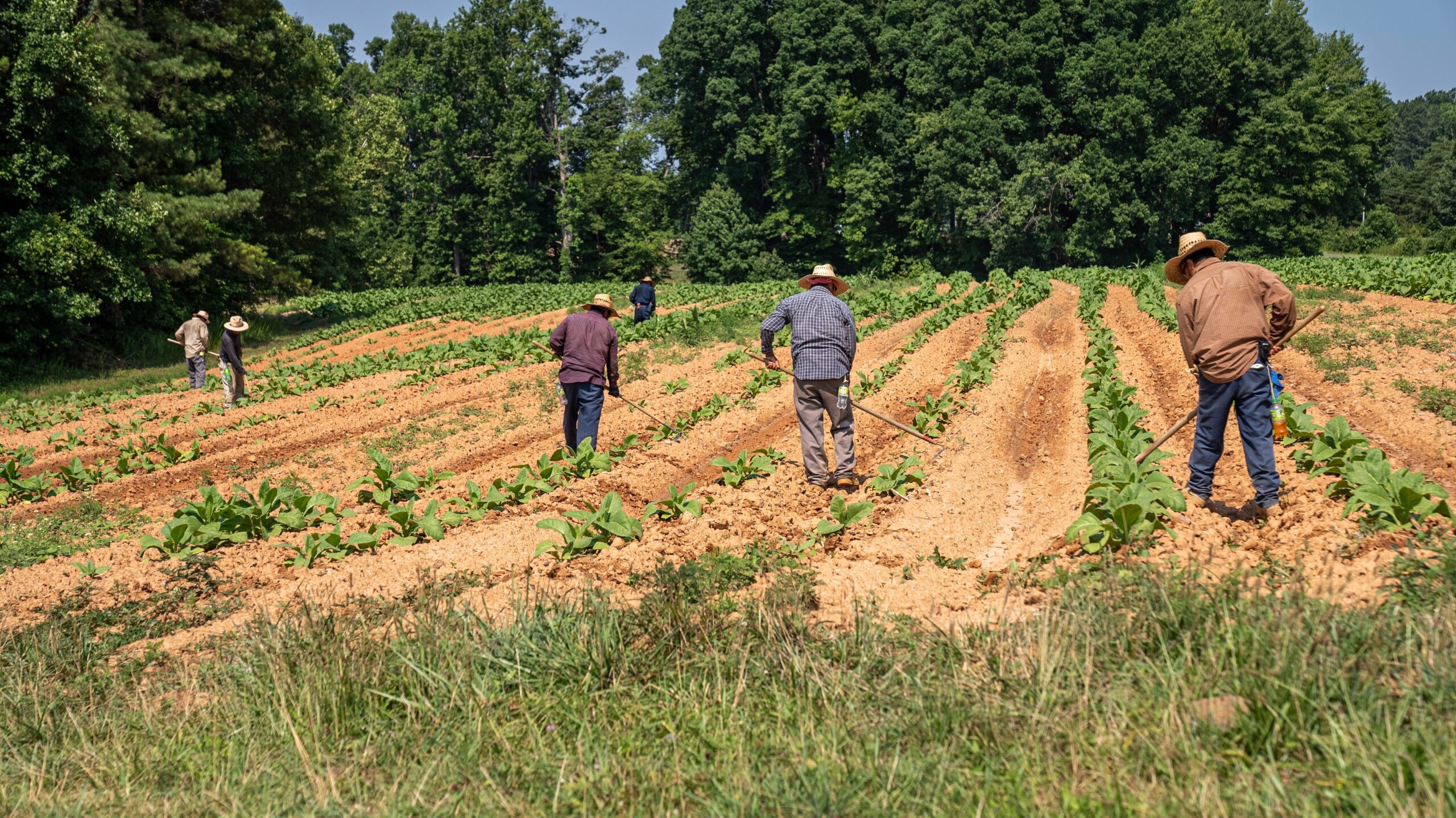
Many farmers work another job—or have a spouse who does—so they can continue paying for seed, equipment, livestock feed, fuel, insurance and land.
Their other income is not always supplementing the farm.
In many cases, it is keeping the farm alive.
Cheap Food Isn’t Really Cheap
At the same time, families are struggling with grocery prices and asking why food costs so much.
That struggle is real. Household budgets are tight, and people deserve access to nutritious food.
But food cannot continually become cheaper while everything required to produce it becomes more expensive.
Seed costs more.
Feed costs more.
Fuel costs more.
Equipment costs more.
Land costs more.
Labor costs more.
Packaging costs more.
Insurance costs more.
Somewhere along the way, someone has to pay that bill.
When we demand food at prices that do not cover the true cost of producing it, the cost does not disappear. It is absorbed by the farmer, the environment, the quality of our food or the long-term security of our food supply.
Cheap food is never truly cheap.
Someone always pays.
We Have Devalued More Than Food
The question cannot simply be, “How do we make food cheaper?”
We also need to ask:
Why have we so drastically devalued the people who grow it?
Why are farmers expected to take all the risks while receiving so little of the reward?
And what happens to our communities when the farms are gone?
When a local farm disappears, we lose more than a business.
We lose knowledge passed between generations. We lose open land. We lose local jobs. We lose relationships. We lose another piece of our ability to feed ourselves.
We become more dependent on a food system controlled by fewer, larger and increasingly distant operations.
That should concern every one of us.
I’m Betting on My Community
I do not know whether America will find the courage to rebuild its agricultural system.
But I know what I can do here.
I can bet on my community.
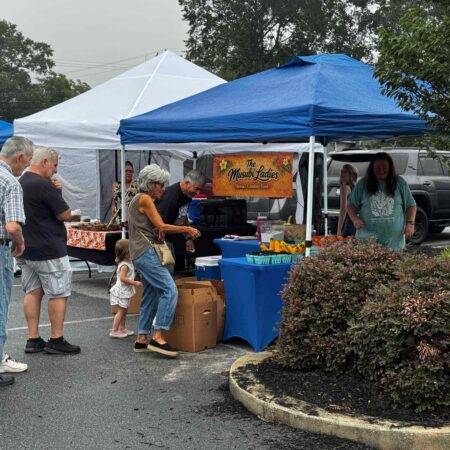
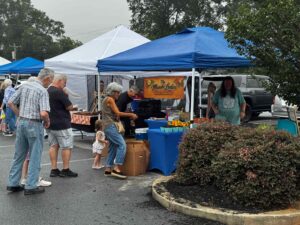
I can bet on the farmer standing under a tent or in a farm stand on Saturday morning.
I can buy the tomatoes that were picked nearby instead of shipped across the country.
I can pay a fair price for eggs, bread, meat, honey and produce—knowing that my purchase helps someone keep planting, growing and showing up.
I can introduce my children to the people who produce their food.
I can give small farms a place to sell.
I can tell their stories.
I can remind our community that shopping locally is not merely a charming Saturday activity. It is an investment in whether local agriculture survives.
The future of food will not be secured by slogans.
It will be secured by people who choose to care—farmers who keep growing and communities willing to stand behind them.
So that is where I’m placing my bet.
I’m betting on our farmers.
I’m betting on our community.
And through the Market, I’m investing in both with everything I have.
Sources: USDA Economic Research Service: Number of U.S. farms and USDA Economic Research Service: Farm household income.